Portugal, between reaffirmation and risk: the unpredictable 2026 World Cup group stage
The 2026 World Cup is proving to be a tournament of surprises, and Portugal, one of the teams with aspirations, prepares for a crucial match against the Democratic Republic of Congo, where the favourite tag guarantees nothing.

Foto: Omar Ramadan / Pexels (https://www.pexels.com/photo/portugal-fans-celebrate-their-team-s-victory-in-the-world-cup-27271660/)
The 2026 World Cup, with its expanded 48-team format, has elevated the unpredictability of the group stage to unprecedented levels. The major teams find themselves under unprecedented pressure to reaffirm their status, and the hypothetical clash between Portugal and the Democratic Republic of Congo is a microcosm of this new and uncertain reality that defies predictions.
The era of the 'giant-killers'

Photo: Omar Ramadan / Pexels (https://www.pexels.com/photo/portugal-fans-at-the-world-cup-27271701/)
The history of the World Cups is full of unexpected results, but the pattern seems to be intensifying in recent editions. Saudi Arabia's victory over Messi's Argentina in 2022 or Japan's triumph against Germany in the same tournament are recent examples of how theoretically inferior teams can disrupt the plans of the powerhouses. The expansion of the number of participants to 48 teams in 2026 only multiplies these opportunities for 'outsiders' to make a splash. In fact, the news coming from this 2026 group stage has already surprised us with Cape Verde's dramatic draw against Spain, a result that has shown that no favourite is safe.
African teams like Morocco, who reached the semi-finals in 2022, or Senegal and Cameroon, who reached the quarter-finals in previous editions, have shown that passion, physicality, and solid tactical discipline can overcome differences in budget and reputation. This is the playing field where Portugal must tread with extreme caution.
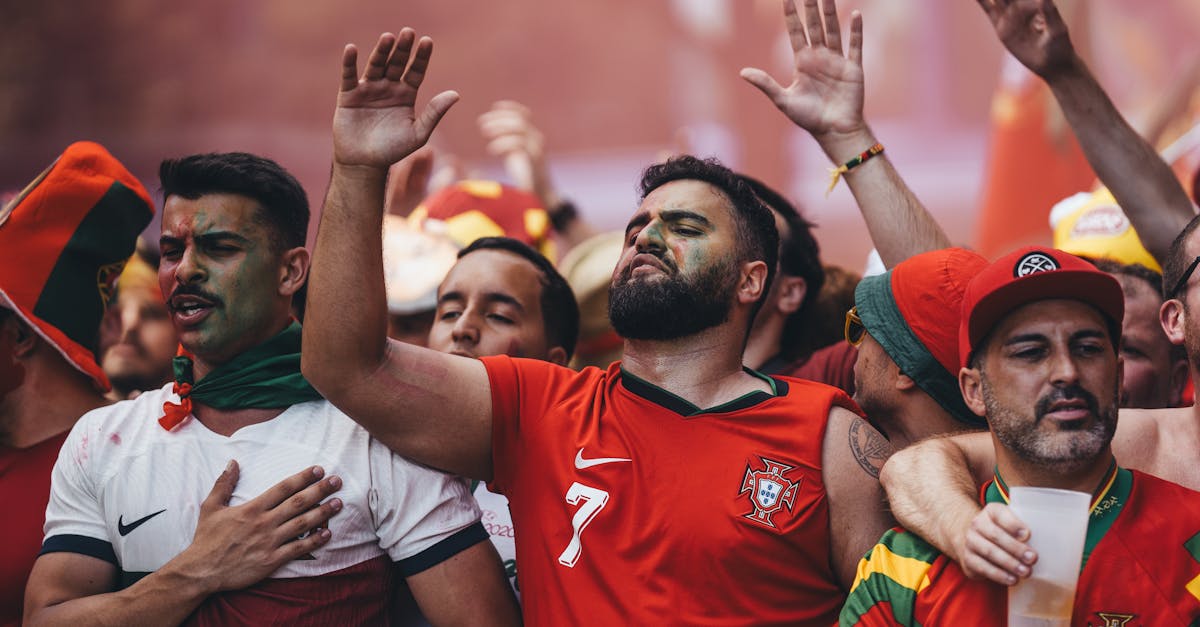
Photo: Omar Ramadan / Pexels (https://www.pexels.com/photo/portugal-fans-at-the-world-cup-27271702/)
Portugal in the spotlight: the favourite's pressure
Portugal, as one of the teams traditionally considered among the contenders due to their talent and experience, faces every match with an obligation to win. However, the group stage of a World Cup is a test of both physical and mental endurance. Favourites must not only secure qualification but also manage their energy, avoid injuries, and build a rhythm of play that prepares them for the knockout rounds. A comfortable victory in the debut can provide room for rotations, while a slow start can generate suffocating pressure.
Squad depth and tactical adaptability become crucial. The strongest teams not only have stars but also substitute players who can change a difficult match. In such a demanding tournament, flexibility is more important than a perfect starting eleven. The ability to win with possession, to survive under pressure, or to change the pace through substitutions will be key.
The threat of the Democratic Republic of Congo
The Democratic Republic of Congo, an opponent that, on paper, might be seen as a minor contender, embodies precisely the type of team that can cause problems. African teams are often characterised by their athleticism, physical intensity, and a 'nothing to lose' mentality that makes them dangerous. While studies have indicated that African teams may have differences in performance indicators such as possession or passing accuracy compared to European powerhouses, many of their players compete in the major European leagues, bringing quality and experience.
A defensive approach and 'destructive minimalism' that prioritises preventing goals and frustrating the opponent have become increasingly effective tactics for traditionally weaker teams. This can lead to low-scoring, tight matches, where a single mistake or a moment of brilliance can decide the encounter. Portugal will need to be prepared for an opponent that will likely seek to minimise risks and exploit any opportunity on the counter-attack or from set pieces.
Navigating the World Cup minefield
For elite teams, the key to avoiding surprises lies in absolute respect for every opponent, concentration from the first minute, and flawless tactical execution. Scoring early goals can be fundamental to disarming opponents who sit deep, while a solid defence is non-negotiable. Furthermore, the logistics of travel in an extended North American World Cup add a factor of wear and tear that teams must manage carefully. The teams with the best ability to adapt to different playing styles and tournament conditions will advance.
In this 2026 World Cup, individual talent and history are important, but resilience, a well-defined strategy, and the ability not to underestimate any opponent, however small they may seem, are the true keys to surviving a group stage that promises to continue breaking all predictions.