Clash of Titans in Midfield: Tactical Keys to England-Croatia in the 2026 World Cup
The anticipated clash between England and Croatia in the group stage of the 2026 World Cup promises to be a true tactical battle, with control of the midfield as the epicentre. We analyse the strategies both teams might deploy to prevail in a decisive encounter.
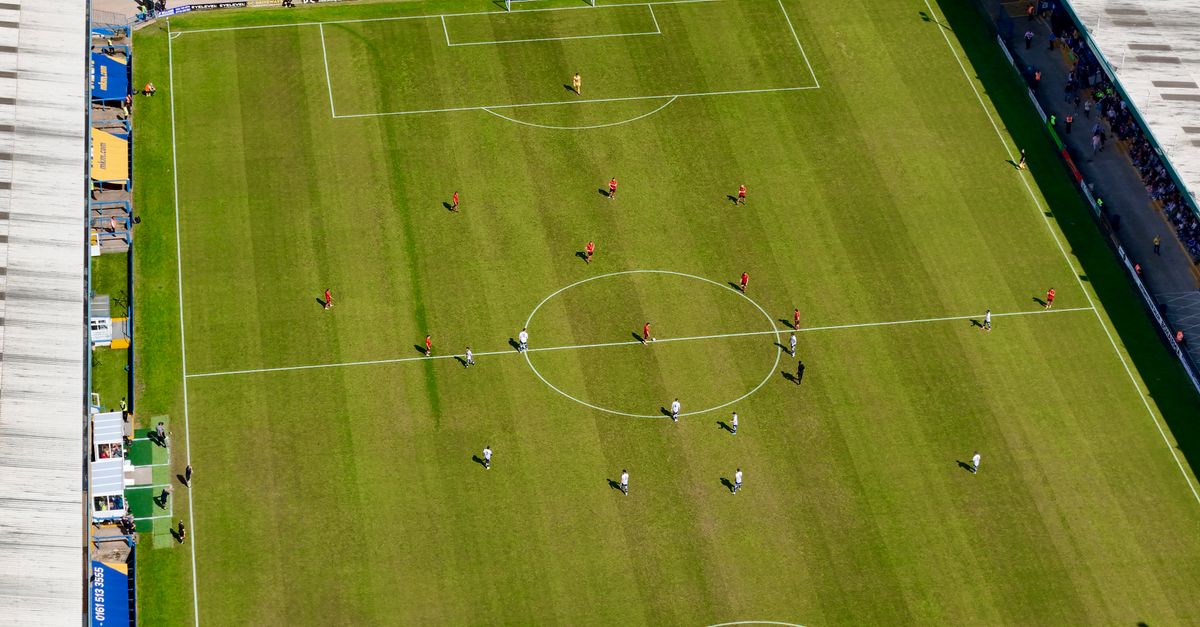
Foto: Mylo Kaye / Pexels (https://www.pexels.com/photo/men-playing-football-on-a-stadium-17779075/)
The curtain of the 2026 World Cup will rise with a fixture that is already a modern classic: England against Croatia. A duel that, due to recent history and playing styles, is shaping up to be one of the jewels of the group stage. Beyond the star players, the tactical board will be decisive, with the midfield as the main arena where much of the match's destiny will be decided.
The Battle for the Heart of the Pitch

Photo: Franco Monsalvo / Pexels (https://www.pexels.com/photo/action-packed-soccer-match-on-outdoor-field-33257253/)
Croatia, true to its identity, will base its approach on ball control and game management. Its historical spine has revolved around an elite midfield, known for its ability to retain possession, dictate the tempo, and transition intelligently. Even with the passage of time, the presence of a conductor like Luka Modrić, who at 40 years old remains fundamental to controlling the tempo and making progressive passes, will be crucial. This patient, midfield-centric style seeks to reduce chaos and generate advantages through technical security.
Facing this, England, under the technical direction of Thomas Tuchel, is expected to present a more structured and aggressive approach. The English team will aim to suffocate their opponents with high pressing and intense counter-pressing to recover the ball as quickly as possible. Their strategy in the middle will involve a double pivot that, in addition to offering defensive solidity, allows the inside midfielders and attackers to break forward and create numerical superiority in advanced areas. The tactical discipline of the English midfield will be vital to avoid being dragged out of position by Croatian mobility, especially by figures like Modrić.

Photo: Franco Monsalvo / Pexels (https://www.pexels.com/photo/dynamic-soccer-training-session-on-sunny-field-37926510/)
The individual duel in the engine room will be fascinating. Players with the ability of Jude Bellingham, who operates in the 'half-spaces' and has the quality to unbalance, will face the discipline of Croatian midfielders like Mateo Kovačić, whose mission will be to deny these vital spaces. The key for Croatia will be to find Modrić in open spaces between the English double pivot, while for England, containment and closing down lines will be priorities.
Attacking Strategies: Versatility vs. Dynamism
In attack, Croatia has proven to be a versatile team. Although they focus on possession, they can also be direct and exploit transitions. Their midfielders are fundamental in the build-up phase and in initiating attacks, carrying the ball forward and setting up attackers on the flanks. Croatia's ability to create danger in tight spaces and through quick combinations in midfield will be a constant threat. However, a potential weakness could be the lack of an elite centre-forward, making the quality of chances and set-pieces even more important.
For their part, England will benefit from the fluidity in the movement of their attackers. Tuchel's system aims to create overloads and constant rotations in the attacking line, making it difficult for opponents to mark. The presence of a reference centre-forward, capable of linking play and dropping into midfield areas, will allow wingers and attacking midfielders to exploit spaces in behind the defence. England's ability to attack quickly when spaces open up, using direct passes and runs in depth, will be a counterpoint to Croatian control. The width generated by the full-backs, who can act as 'wing-backs' or join the midfield, will also be key to stretching the opposition defence and opening up central channels.
Keys to Victory
England's success will depend on imposing their high tempo, suffocating Croatian build-up play with their pressing, and being incisive in quick transitions. The ability of their midfielders to break lines and the mobility of their forwards to disrupt the Croatian defence will be decisive factors.
Croatia, on the other hand, will need all their experience and composure to manage English intensity. Ball control, patience to find gaps in the opposition's defensive block, and precision in their passes to progress will be fundamental. Their midfield's ability to remain calm under pressure and effectiveness in their few but clear goal-scoring opportunities could tip the balance in their favour.
Ultimately, England-Croatia will be a clash of styles and philosophies. The team that manages to impose its vision of the game in midfield and is more effective in exploiting its attacking strengths will have a significant advantage in this crucial start to the 2026 World Cup.