From Defensive Guardian to Offensive Engine
In the early days of the 1970s, the full-back was primarily a wide defender, tasked with preventing opposition wingers from advancing and covering the flank with few offensive forays. The prevailing tactical philosophy of the era, centred on defensive solidity, demanded that full-backs remain in midfield or even behind the defensive line.
Tactical and Training Shifts
From the 1990s onwards, the introduction of high pressing and the need to win the ball back in more advanced areas transformed the full-back's role. Coaches began to value wide players' ability to participate in build-up play while maintaining their defensive duties. The defensive line formation became more flexible, allowing full-backs to move into attacking areas when the ball was in central positions.
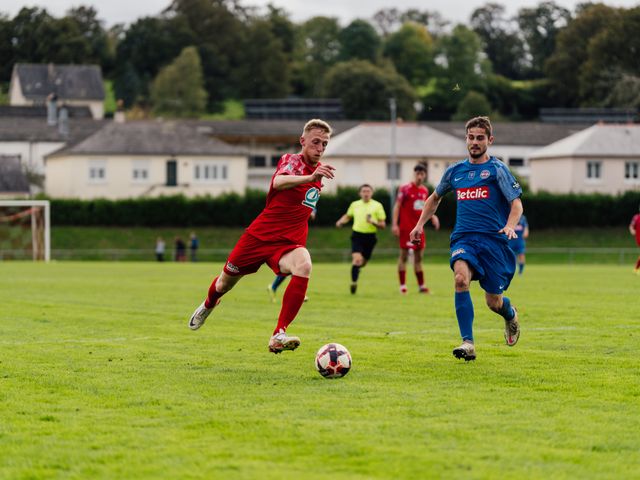
Photo: Bechir Lachiheb / Pexels (https://www.pexels.com/photo/intense-soccer-match-on-green-field-29920213/)
Physical and Technical Demands
The leap in physical demands is reflected in cardiovascular endurance, speed, and recovery capacity. Modern full-backs cover more ground than their predecessors, averaging 10–12 km per match in European competitions. In terms of technique, the accuracy of crosses, ball control, and vision are essential. Training sessions are adapted with specific speed work, endurance drills, and small-sided game exercises.
The Full-Back in Contemporary Tactics
Today, the full-back has become a key component of offensive build-up play. When the team has possession, the full-back often moves into central areas, creating overloads that add depth and confuse the opposition defence. In the attacking phase, the role of "crossing provider" has become one of their primary responsibilities. Formations like 4–3–3 or 3–5–2 rely on this movement to generate numerical superiority in midfield and attack.
Photo: Efrem Efre / Pexels (https://www.pexels.com/photo/american-football-players-training-in-sweden-37234659/)
Data analysis reveals that full-backs who exceed the average number of completed passes per game tend to create more goal-scoring opportunities. The combination of speed and technique allows full-backs to become an additional attacking line, reducing pressure on the forwards and opening up penetration channels.
Future of the Position
Technological advancements, including performance sensors and video analysis, will continue to refine the parameters defining the ideal full-back. The trend suggests that the next generation of full-backs will not only cover the flanks but also act as mini-midfielders, capable of distributing the ball over long distances and participating in the creation of goal-scoring plays.
In conclusion, the evolution of the European full-back illustrates how tactical adaptation, specialised training, and technology have transformed a traditionally defensive position into an indispensable offensive engine for any competitive team on the European stage.