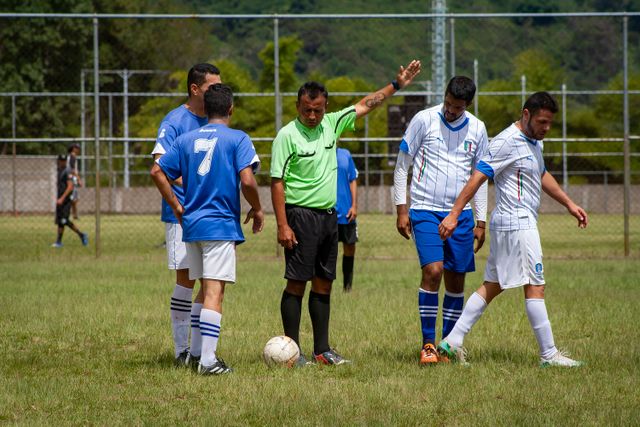
Brazilian football was rocked on July 26, 2026, by a regrettable episode of violence that overshadowed the conclusion of a municipal championship. During the final of the Sapeaçu Municipal Championship, in the state of Bahia, player Paco, from the Lagoinha team, physically assaulted referee José Lourenco Assis dos Santos Conceicao after receiving a red card.
The Incident That Shocked Sapeaçu
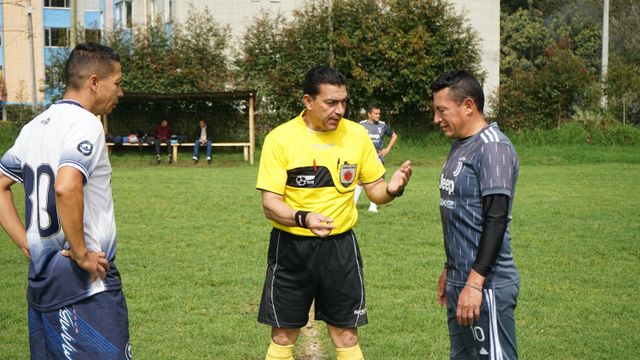
Photo: John Silva / Pexels (https://www.pexels.com/photo/referee-and-players-17392634/)
The decisive match, which pitted Lagoinha against Bebe Água, was proceeding normally until a play reviewed with VAR assistance led to Paco's expulsion. Far from accepting the referee's decision, the footballer reacted violently, launching several blows against Lourenco, who is part of the refereeing body of the Bahian Football Federation (FBF). Images of the altercation quickly circulated, showing the tension and the need for intervention to control the situation.
The assault forced the match to be stopped for approximately 11 minutes, with members of both teams and staff entering the field to restore calm. Finally, the match was able to resume and be completed, but the violent action left an indelible stain on the tournament's celebration.
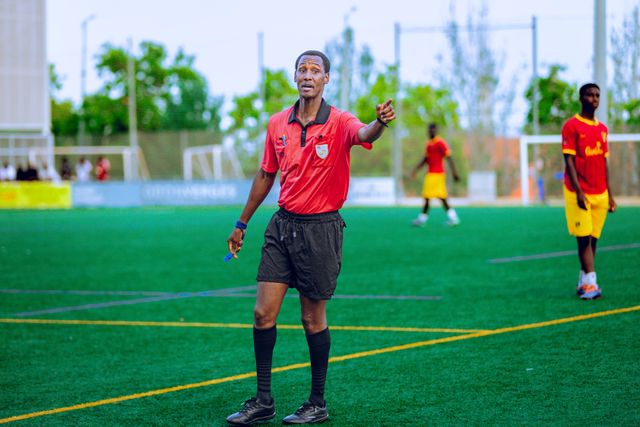
Photo: El gringo photo / Pexels (https://www.pexels.com/photo/soccer-referee-directing-players-on-field-33110201/)
The Gravity of the Assault and Its Implications
These types of violent acts against referees are unacceptable and represent a serious affront to the principles of respect and fair play that govern sport. A referee is the ultimate authority on the field, and their physical integrity must be guaranteed for the proper development of any competition. An assault by a player on a referee undermines refereeing authority and creates an atmosphere of hostility that distorts the essence of football.
Possible Repercussions for the Player
The consequences for Paco could be severe and multifaceted:
- Sporting Sanctions: The Bahian Football Federation and the Brazilian Football Confederation (CBF) have the power to impose exemplary punishments. This could include a lengthy suspension, which could extend for months or even years, preventing him from participating in any organised competition. Significant financial fines are also likely. It would not be the first time a player has received a harsh sanction for assaulting a referee in Brazil; previous cases have seen long suspensions and contract terminations.
- Career Repercussions: Beyond official sanctions, Paco's image will be severely affected. A history of violence can close doors at future clubs and hinder his continuation in professional football, even in lower leagues. Clubs are often reluctant to sign players with a record of extreme unsportsmanlike conduct.
- Potential Legal Actions: Although in many cases assaults on the field are resolved in sports courts, the severity of the attack could open the door to criminal charges for assault. In the past, incidents of referee violence in Brazil have led to charges of attempted homicide and arrests, depending on the extent of the damage caused and the decision of the authorities.
Impact on Brazilian Football and Referee Safety
The Sapeaçu incident highlights the urgent need to strengthen safety and disciplinary measures in Brazilian football, especially in youth leagues and regional championships. The assault on José Lourenco sends a worrying message about the vulnerability of referees, who often operate without adequate protection.
The Bahian Football Federation and the CBF face the challenge of sending a clear and forceful message: violence has no place in football. This involves not only punishing the aggressor but also reviewing safety protocols and support for referees. The image of Brazilian football, renowned for its passion and talent, is tarnished by these types of actions, which alienate fans and discourage participation in the sport. It is essential that sports authorities act with the utmost firmness to protect the integrity of referees and preserve the values of the game.